It's 2:17 AM. You've been in bed since 11, but you're still scrolling. One more Reel. One more competitor's post to analyze. One more story to check if anyone's messaging. Tomorrow's going to be rough, but right now, in this blue-lit haze, you're convincing yourself this counts as "research."
Welcome to the modern business owner's reality, where the tool you need to grow your business is the same one slowly eating away at your sanity.
The Paradox That's Keeping You Up at Night
Here's the uncomfortable truth: social media isn't optional anymore. It's where your customers are, where your competitors are winning, and where your brand needs to show up if you want to survive. But here's the other truth, the one we don't talk about at networking events, it's also destroying your mental health, your productivity, and your ability to think strategically.
Research shows that 72% of founders report mental health issues, with stress being the primary culprit. Yet 81% keep these struggles hidden because admitting you're drowning feels like admitting failure. Meanwhile, 83% of self-employed people report feeling lonely despite scrolling through social feeds all day, watching everyone else's highlight reel while sitting alone in their home office.
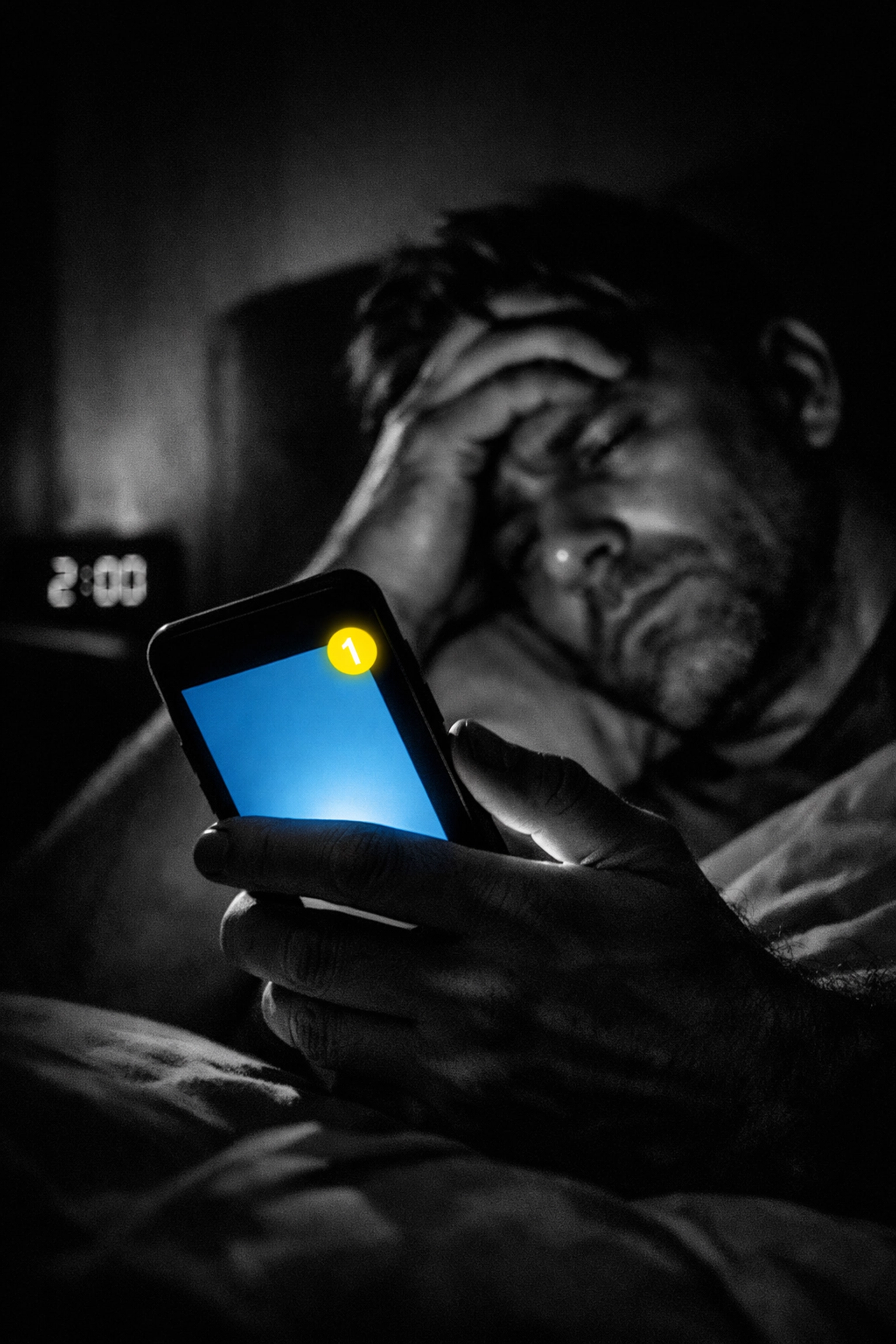
The cruel irony? The more successful you become at social media marketing for small business owners, the more trapped you often feel.
Why You're Scrolling at 2 AM (And It's Not Just FOMO)
Let's talk about something called "Revenge Bedtime Procrastination." It's when you sacrifice sleep for leisure activities because you feel like you've had no control over your time during the day. As a business owner, you've spent all day firefighting, handling clients, managing staff, dealing with suppliers. Your brain hasn't had a moment to just… be.
So at 2 AM, when you should be sleeping, you're reclaiming your time the only way you know how: mindless scrolling. It feels like relief. It feels like you're finally doing something for yourself. But it's not rest, it's just another form of work disguised as relaxation.
Your exhausted brain is seeking dopamine hits from likes, comments, and that little red notification badge. And social media platforms? They've designed their entire architecture to exploit this exact vulnerability.
Your Brain on Social Media: A Battle You're Losing
Here's what's happening in your skull while you scroll:
Your prefrontal cortex, let's call it your CEO brain, is responsible for strategic thinking, decision-making, and impulse control. This is the part of you that built your business, that closes deals, that sees the big picture.
Then there's your amygdala, your reactive brain. This is your ancient survival system that responds to threats, rewards, and emotional triggers. It's fast, impulsive, and it doesn't care about your Q2 targets.
When you're scrolling through social media, especially when you're tired, your amygdala is in the driver's seat. Every notification triggers a stress response. Every competitor's success post activates your fight-or-flight system. Every controversial comment tempts you into reactive mode.
Your CEO brain? It's exhausted, overwhelmed, and quietly stepping aside while your reactive brain makes decisions that future-you will regret.
This is why you find yourself rage-posting at midnight, overthinking someone's story reaction, or compulsively checking your business page stats seventeen times before breakfast. It's not a character flaw, it's neuroscience.

The Ethical Marketing Dilemma Nobody's Talking About
Here's where it gets complicated. You need to market your business on social media, but you've felt firsthand how toxic these platforms can be. So how do you build your presence without contributing to the collective digital burnout, the "brain rot" that's making everyone miserable?
This is the question keeping ethical business owners up at night (well, that and the scrolling). You don't want to use manipulative tactics. You don't want to create FOMO. You don't want to be the reason someone else is up at 2 AM feeling inadequate.
But the algorithm rewards sensationalism, controversy, and constant posting. It punishes authenticity, nuance, and boundaries. You're being forced to choose between effective marketing and ethical marketing: and that choice shouldn't exist.
The truth is, you can build a thriving social presence without becoming part of the problem. But it requires a completely different approach to social media and advertising than what most "gurus" are selling.
The Content Day Solution: Taking Back Your Time
Here's what most business owners don't realize: you don't actually need to live on social media to succeed on social media. You just need to be strategic about when and how you show up.
This is where the concept of a Content Day changes everything. Instead of drip-feeding your attention to Instagram throughout every single day, you batch-create content in concentrated sessions.
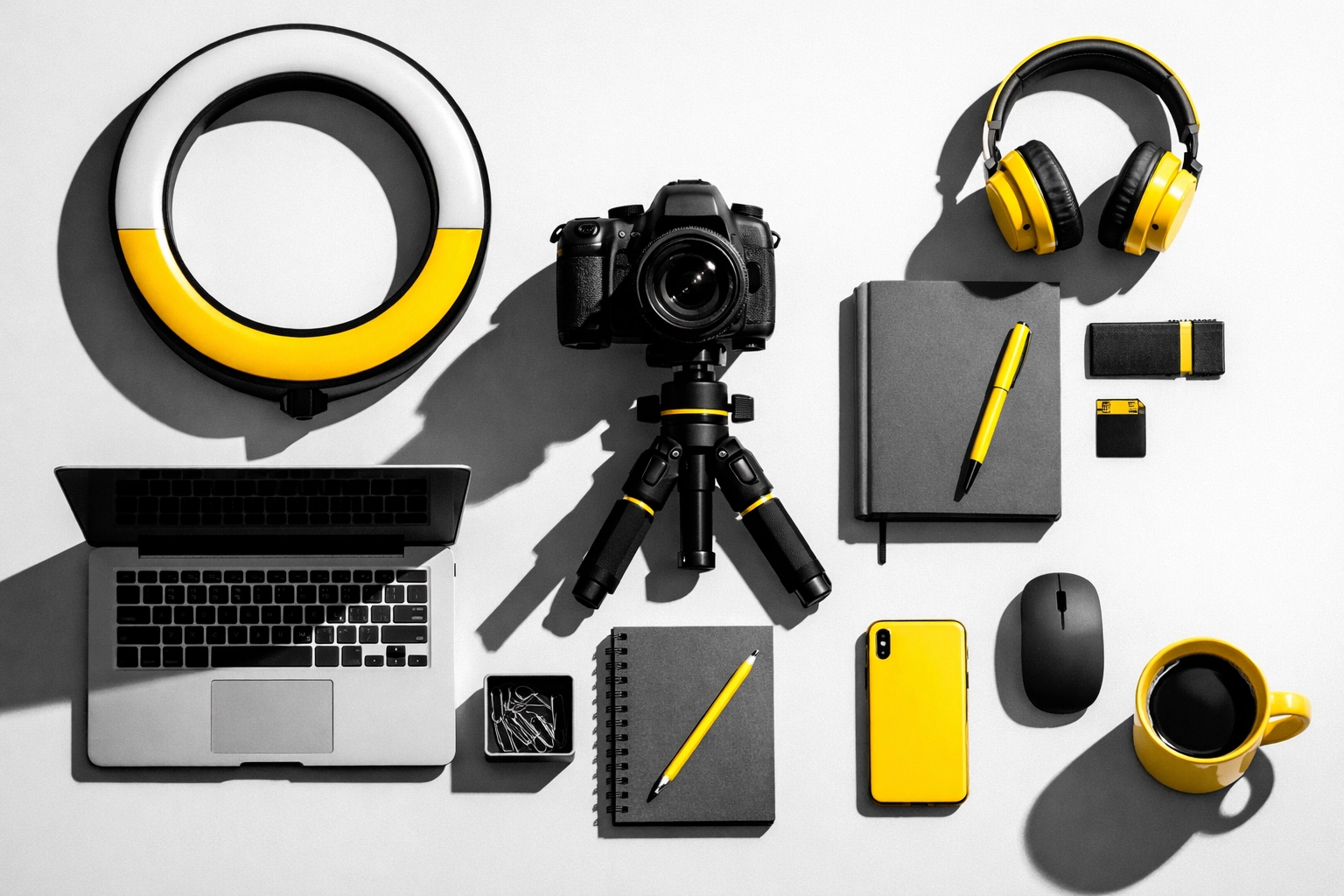
At Southside Media, we've refined this into an art form. Our Content Day service involves filming an entire month's worth of content in one focused day. No more pulling out your phone between meetings. No more "quick stories" that turn into hour-long scrolling sessions. No more wondering what to post tomorrow while you're trying to sleep tonight.
One day. One focused shoot. Four weeks of content. Then you step away and run your actual business.
The psychological freedom this creates is profound. When you know your content is handled for the month, you can delete the apps from your phone without guilt. You can focus on revenue-generating activities instead of algorithm-chasing. You can think strategically instead of reactively.
Practical Solutions: The 3-Second Reset
Theory is great, but you need tools you can use right now. Here's your new best friend: the 3-second reset.
Every time you reach for your phone, pause for three seconds and ask: "What am I reaching for this phone to accomplish?"
Not what you'll probably end up doing (scrolling for 45 minutes), but what you're intending to do. This tiny pause interrupts the automatic habit loop and reactivates your prefrontal cortex: your CEO brain.
Most of the time, you'll realize you have no legitimate reason to pick up the phone. You're just responding to boredom, anxiety, or habit. That awareness alone will cut your mindless scrolling by 40-60%.
Create Geographical Boundaries
Your phone doesn't belong everywhere. Seriously. Create phone-free zones in your life:
-
Bedroom: Charge your phone in another room. If you need an alarm, buy a $15 alarm clock. Your bedroom is for sleep and rest, not for comparing yourself to competitors at 2 AM.
-
Dining table: When you eat, eat. Revolutionary concept, right? But this simple boundary helps retrain your brain that not every moment requires digital stimulation.
-
First and last hour: No phone for the first hour after waking or the last hour before bed. Use this time for strategic thinking, planning, or genuine rest.
These geographical boundaries aren't restrictions: they're freedom. They're you taking back control from an algorithm that doesn't care about your business goals or your mental health.

Building an Empire Without the Burnout
The business owners who thrive in 2026 and beyond won't be the ones who post most frequently or stay online longest. They'll be the ones who figured out how to leverage social media without being consumed by it.
They'll be the ones who:
- Batch their content creation instead of posting reactively
- Set actual boundaries around digital engagement
- Prioritize strategic thinking over constant responding
- Build marketing systems that don't require their constant attention
- Work with teams who understand both social media productivity and mental health
Your business deserves to grow. Your mental health deserves to be protected. These goals aren't mutually exclusive: but achieving both requires intentional systems, not just more willpower.
The empire you're building is too important to lose to the scroll. It's time to market smarter, not just more frequently. Your 2 AM self will thank you.